
Allama Muhammad Iqbal
A Bridge Between East and West
The 1 in million Visionary of the East:
In the history of human thought, there are very few individuals who can claim to be a poet, a philosopher, a lawyer, and a political visionary all at once. Allama Muhammad Iqbal was exactly that—a 1 in million mind whose words breathed life into a sleeping nation and whose philosophy continues to challenge the world’s greatest thinkers.
The Architect of the Self (Khudi)
The core of Iqbal’s greatness lies in his concept of "Khudi" or the "Self." While many philosophers of his time were focused on losing oneself in the divine, Iqbal taught the opposite. He believed that the human soul is a diamond that must be polished through action, hard work, and self-reliance.
"Exalt thy Self so high that before every decree, God himself asks thee: What is thy pleasure?"
This wasn't just poetry; it was a call to action. He wanted every individual to recognize their unique potential and become a "1 in million" force for good in the world.
A Bridge Between East and West
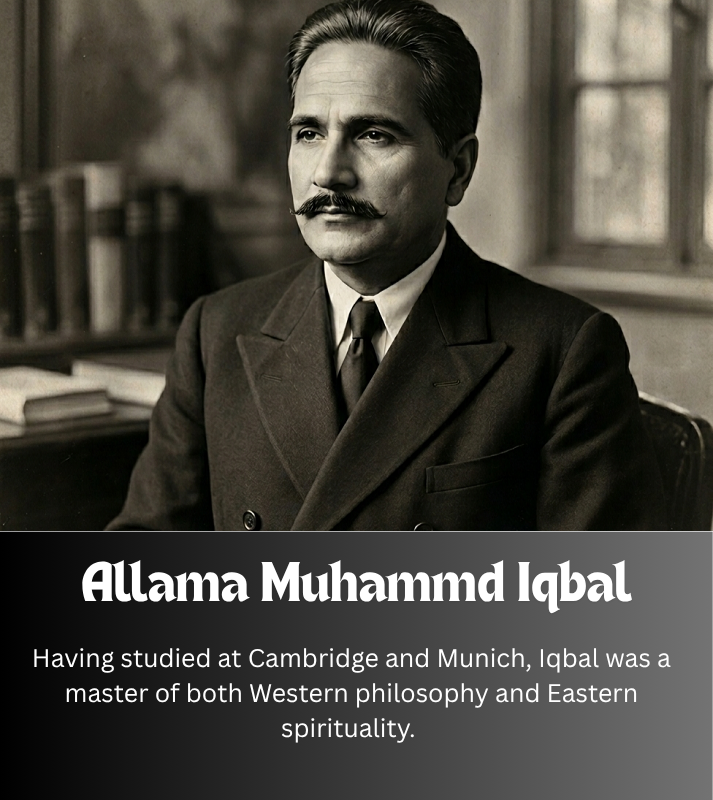
Having studied at Cambridge and Munich, Iqbal was a master of both Western philosophy and Eastern spirituality. He could discuss Nietzsche and Kant as easily as he could recite Rumi. This unique background allowed him to critique the materialism of the West while simultaneously urging the East to wake up from its intellectual stagnation. He wrote his masterpieces in both Urdu and Persian, ensuring his message of freedom and spiritual awakening reached millions across borders.
A Poet, A Scholar & A Visionary of the East
The Dreamer of a New Nation
Iqbal is famously known as Shair-e-Mashriq (The Poet of the East) and Mufakkir-e-Pakistan (The Thinker of Pakistan). He was the first major leader to provide a clear, philosophical vision for a separate homeland for the Muslims of the Indo-Pak subcontinent. Though he passed away before seeing the birth of Pakistan, his "Allahabad Address" of 1930 remains the foundational blueprint of the nation.
Why He is a "1 in million" Mind
Intellectual Courage: He wasn't afraid to challenge traditional views to find a path toward modern progress.
Timeless Message: His poetry is as relevant today as it was 100 years ago, inspiring youth to aim for the stars (metaphorically represented by his favorite bird, the Shaheen or Falcon).
Global Impact: From the halls of academia in Germany to the streets of Lahore, his work is studied by scholars worldwide as a pinnacle of 20th-century thought.
Discover the extraordinary and unique stories.
Inspire
© 2026. All rights reserved.