
Isaac Newton
The 1 in million Mind That Unlocked the Universe
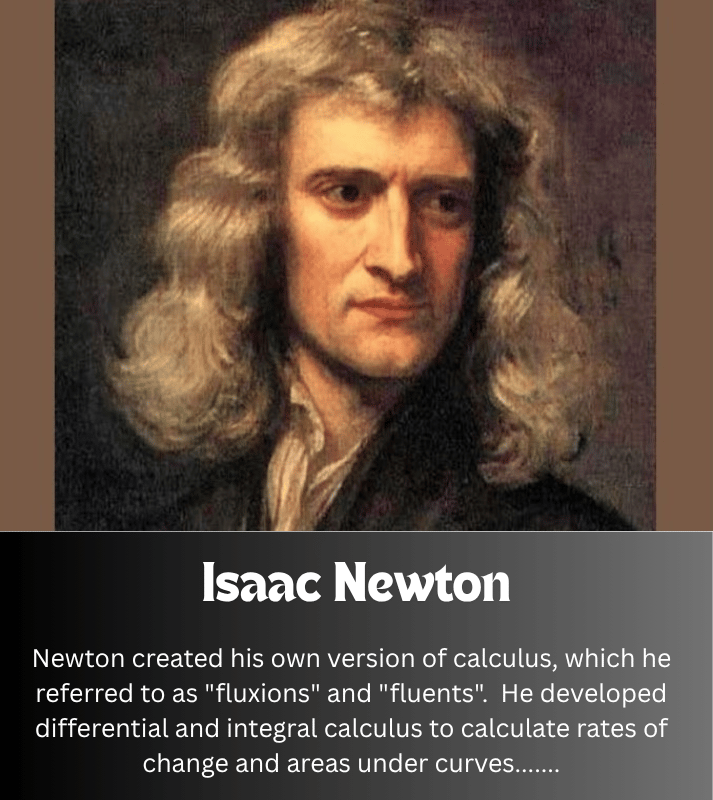
Sir Isaac Newton wasn’t just a scientist; he was a foundational architect of the modern world. His ability to see the invisible forces governing our lives makes him one of the most extraordinary 1 in million minds in human history. From the falling apple to the orbit of the moon, Newton’s insights bridged the gap between Earth and the heavens.
The Early Spark of Genius
Born prematurely on Christmas Day in 1642, Newton’s survival was the first of many miracles in his life. While he was expected to become a farmer, his mind was elsewhere—obsessed with mechanical devices, sundials, and the fundamental "why" behind the physical world.
When the Great Plague closed Cambridge University in 1665, Newton returned home to Woolsthorpe Manor. It was during this "Year of Wonders" (Annus Mirabilis) that he developed his theories on calculus, optics, and the law of gravitation.
Three Pillars of Newton’s Legacy
The Laws of Motion: Before Newton, people believed the heavens and Earth operated by different rules. His three laws of motion provided a universal language for how everything—from a pebble to a planet—moves.
The Invention of Calculus: To describe the changing world, Newton needed a new kind of mathematics. He developed "fluxions" (now known as calculus), providing the framework that engineers and physicists still use to this day.
The Secrets of Light: By passing white light through a prism, Newton proved it was composed of a spectrum of colors. This discovery revolutionized optics and led him to invent the reflecting telescope, a design still utilized in modern astronomy.
Born prematurely on Christmas Day in 1642
The "1 in million" Insight: Universal Gravitation
The story of the apple is more than a legend; it represents a monumental shift in human thought. Newton realized that the same force pulling an apple to the ground was responsible for keeping the moon in orbit around the Earth. By documenting this in his masterpiece, Philosophiæ Naturalis Principia Mathematica, he effectively "unified" the universe under a single set of laws.
Discover the extraordinary and unique stories.
Inspire
© 2026. All rights reserved.